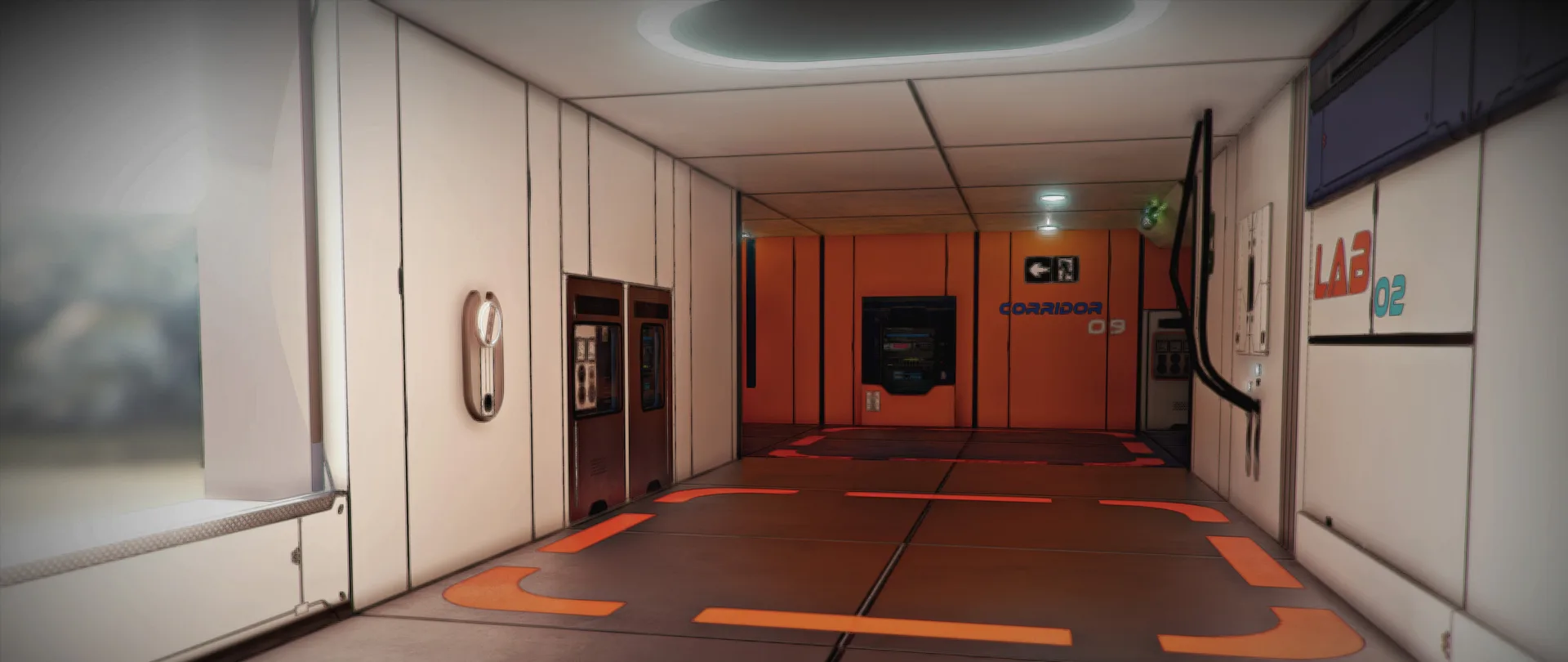
Genesis Lab
Built a mobile-optimized sci-fi environment with a single texture set: modular pieces, efficient UV layout, and draw call management for smooth performance.
Genesis Lab is a modular sci-fi environment I built in Unity 4.1 as a technical study. The constraint: build a complete, detailed lab environment using the fewest resources possible. The entire scene uses just 4 materials: one for all geometry, one for glass, one for decals, and a skybox.
The One-Texture Workflow
The approach was inspired by Tor Frick's single-texture environment technique, featured on the Unreal Engine blog. The idea is simple but demanding: author one carefully planned trim sheet that covers every surface type the environment needs (walls, floors, panels, trims, grates, pipes), then UV-map all modular pieces to pull from that single texture.
This forces you to think about modularity and texture economy from the very first piece. Every module shares the same material, which means the GPU batches aggressively. The result is an environment that looks dense and detailed but is extremely cheap to render.
Why It Matters for Mobile
On mobile hardware, material count and draw calls are the two biggest performance bottlenecks. By collapsing the entire environment down to essentially one material, the scene could be rendered in very few draw calls regardless of how many modular pieces were in view. This made the environment run smoothly on mobile devices that would normally struggle with a scene of this visual complexity.
Modular Kit
The lab is assembled from a set of interlocking pieces: wall segments, floor tiles, ceiling panels, doorframes, pipes, vents, and trim pieces. All of them reference the same trim sheet texture. Swapping pieces in and out to change the layout takes seconds because everything is designed to snap together on a consistent grid.
Technical Details
- Materials: 4 total (geometry, glass, decals, skybox)
- Texture sets: 1 trim sheet for all environment geometry
- Modeling: Blender and Maya
- Engine: Unity 4.1
- Target: Mobile-grade performance with desktop-quality visual density